
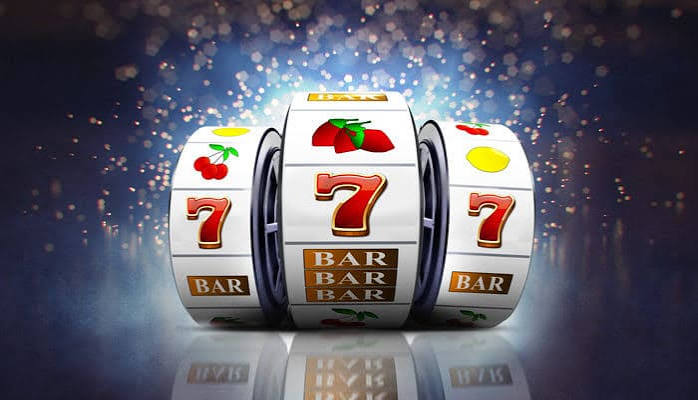
Not every change in entertainment arrives with a dramatic announcement. Sometimes a familiar idea gradually changes until the original version feels almost unrelated to what exists today. That is what has happened with the slot experience as it has moved deeper into the digital world.
The reels are still recognizable, but the environment around them has been transformed. A player can open a game from a phone, explore its rules, adjust the wager, examine its features, and move to another title without leaving the same digital platform.
This freedom has encouraged an enormous amount of experimentation. Game creators are no longer working within the physical boundaries of a machine. They can decide how many elements appear on screen, how symbols behave, how animations unfold, and how the interface responds to interaction.
As a result, themes have become far more ambitious. A game might take inspiration from exploration, mythology, nature, science fiction, history, or an entirely fictional setting. Characters can move across the screen, backgrounds can change, and visual effects can respond to particular events.
Yet an attractive appearance is only the beginning. A well-designed game also needs to make sense while it is being used. Players should be able to identify important controls, understand basic information, and reach the rules without having to search through an unnecessarily complicated interface.
This is particularly important because digital audiences are accustomed to simple navigation. People regularly use applications where information is available within a few taps. Online casino platforms are competing with those expectations, so usability has become an important part of the overall experience.
The variety of game mechanics has expanded at the same time. Developers can introduce different reel structures, changing symbols, cascading combinations, expanding areas, multipliers, wilds, and feature rounds. These additions can give individual titles their own rhythm.
But more features do not necessarily mean a better experience. If too many mechanics appear at once, a game can become difficult to follow. Good design is often about deciding what should be emphasized and what should remain in the background.
That is where the next stage of development may become particularly interesting. Instead of simply adding more features, creators can focus on making every existing element work better together.
The modern slot is therefore less a single type of game and more a flexible digital format. Its presentation can change, its mechanics can evolve, and the technology delivering it can take entirely new forms.
What remains important is the ability to adapt. As audiences become more familiar with sophisticated digital entertainment, developers will need to keep finding fresh ideas without losing the straightforward interaction that makes the format immediately understandable.
The future slot experience may eventually look very different from today’s version, but its evolution will continue to demonstrate how a simple entertainment concept can be repeatedly reshaped by changing technology, creative thinking, and user expectations.