
The current discourse around generative AI suggests that we are entering an era of the “one-click” creative director. The narrative is seductive: type a sentence into a box, wait thirty seconds, and receive a high-conversion hero image for a landing page or a set of social assets ready for deployment. To an experienced designer or a performance marketer responsible for six-figure ad spends, this is an oversimplification that borders on the reckless. Raw generative output is rarely production-ready; it is a rough cut, a digital block of marble that requires significant refinement before it can safely represent a brand.
The gap between a promising generation and a professional asset is where most AI initiatives fail. It is the difference between a character having five fingers or six, a background having distracting artifacts, or the lighting failing to match a brand’s specific aesthetic guidelines. To move from exploration to execution, creators must pivot from “prompting” to “editing.”
The Illusion of the One-Click Masterpiece
Generative models have become remarkably good at mimicry, but they remain fundamentally indifferent to brand compliance and technical specifications. A model like Flux or Nano Banana might produce a visually stunning sunset, but if that image is destined for a high-ticket landing page, any slight “uncanny valley” artifact—a distorted texture in the distance or a nonsensical shadow—can subconsciously erode consumer trust.
In paid media, these small errors are expensive. When an ad is served to millions of users, the “plastic” sheen or the characteristic softness of AI-generated skin becomes a signal of low-quality production. Furthermore, raw generations frequently fail to respect the negative space requirements needed for typography or UI overlays. You might get a beautiful subject, but if they are positioned exactly where your “Buy Now” button needs to live, the image is functionally useless without manual intervention.
The reality of the production pipeline is that the first generation is almost never the final one. We are seeing a necessary shift in the industry where the “prompt” is seen merely as a starting point. The real work begins when that raw image is brought into a dedicated editorial environment to be scrubbed of its generative quirks.

The Mid-Funnel Polish: Moving from Generation to Modification
Strategic editing is about surgical control. When a marketer needs to localize a global campaign, they don’t want to re-generate the entire scene and risk losing the core visual identity. They need to swap a specific object, change a background to match a regional aesthetic, or remove a distracting element that doesn’t fit the campaign’s narrative.
This is where the role of a professional AI Photo Editor becomes critical. Instead of cycling through dozens of new prompts—a process that is both time-consuming and computationally expensive—designers can use targeted tools to modify existing assets. For instance, if a lifestyle shot is perfect except for a brand-clashing coffee cup on a table, an object eraser tool is significantly more efficient than trying to “prompt out” the cup through iterative generation.
By utilizing an AI Photo Editor, creative teams can bridge the gap between a generic base image and a specific brand aesthetic. This level of modification allows for the preservation of “happy accidents” in the original generation while removing the technical flaws that would otherwise disqualify the asset from a professional campaign. It’s about maintaining the creative intent while enforcing the technical rigor required for commercial deployment.
Technical Fidelity and the Resolution Ceiling
One of the most persistent hurdles in generative media is the resolution ceiling. Most base models generate images at resolutions suitable for mobile social feeds but insufficient for large-format display ads or high-resolution desktop backgrounds. The common “upscaling” solution often backfires by smoothing out textures until the image looks like a watercolor painting, losing the tactile detail that makes a photo feel real.
Managing texture and detail retention during the enhancement process is a nuanced task. It requires a balance between increasing pixel density and maintaining the structural integrity of the original image. When working with disparate models—perhaps using Seedream for a specific artistic style and then needing to match it with a video element from Kling—consistency becomes the primary challenge.
It is important to maintain a healthy skepticism toward “infinite upscalers.” There is a hard limit to how much information can be “imagined” back into a low-res file before it starts to hallucinate. In professional workflows, the goal isn’t just to make the image bigger; it’s to make it sharper while keeping the noise profile consistent with what a camera sensor would actually produce. If the upscale makes the skin look like porcelain while the background retains film grain, the composite falls apart.
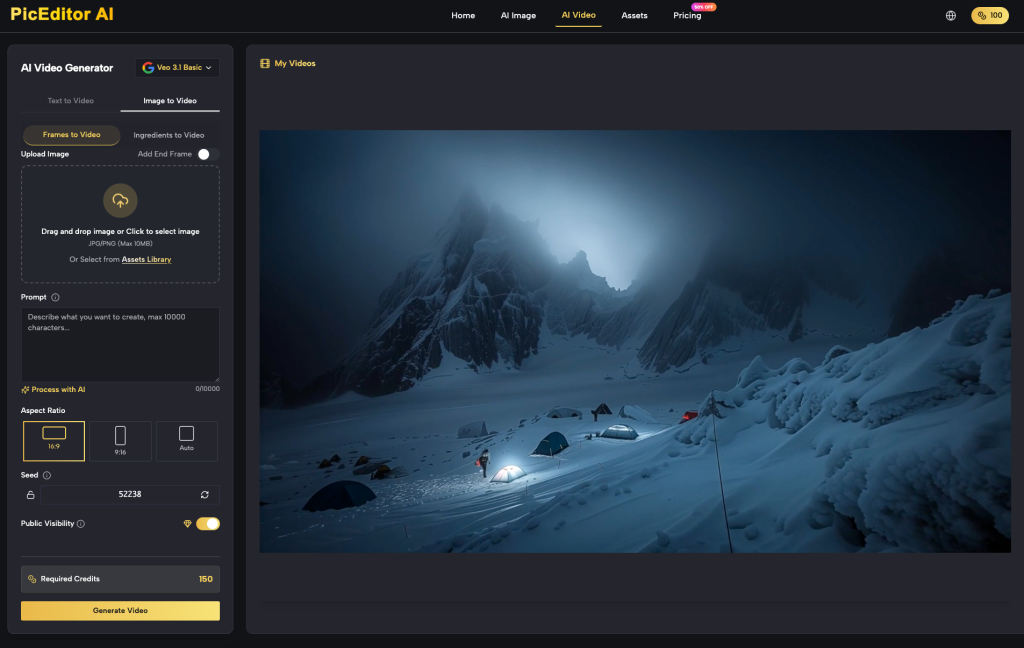
Workflow Integration: The Designer’s New Toolkit
Integrating these tools into a repeatable pipeline is what separates indie makers from production-ready agencies. The goal isn’t to replace the existing stack—be it Adobe-based or Figma-based—but to augment it with high-velocity AI interventions.
One of the most practical applications we are seeing is in the realm of inclusive marketing. Rather than organizing multi-day photo shoots to capture every demographic variation, teams are using AI Photo Editing to perform high-fidelity face swaps on a single, high-quality base asset. This allows for diverse representation across various markets without the logistical nightmare of traditional production, provided the lighting and skin-tone transitions are handled with enough precision to avoid looking “pasted on.”
Furthermore, automated, AI-driven segmentation is replacing hours of manual masking. The ability to instantly isolate a subject from its background allows designers to iterate on landing page layouts in real-time. This level of agility is essential in performance marketing, where the ability to test five different background variations against a single product shot can lead to significant improvements in conversion rates.
However, a moment of practical judgment is required here: AI is not yet a perfect replacement for the “human eye” in complex compositions. While it can handle 90% of the masking and color grading, the final 10%—the subtle color spill from a background onto a subject’s hair, for example—often still requires a human designer’s touch to feel truly authentic.
The Ethics of Enhancement and the Unknowns of Attribution
As we lean more heavily on these tools, we must remain aware of the shifting legal and ethical landscape. The industry is currently in a state of ambiguity regarding copyright and the “protectability” of AI-generated and AI-edited work. This uncertainty means that for high-consequence luxury branding, many firms still opt for a hybrid approach: a human-shot core element supplemented by AI-generated environments.
We cannot yet conclude that AI-only workflows will entirely replace traditional studio photography for every use case. There is a specific “soul” and “imperfection” in high-end photography that models still struggle to replicate perfectly. Recognizing when to stop editing and accept that a physical, human-shot element is required is a mark of a mature creative team.
Ultimately, the successful use of an AI Photo Editor in a professional context is about restraint. It is about using the technology to enhance, fix, and scale, rather than just to generate “more.” As the novelty of generative AI wears off, the market will return to its baseline demand: high-quality, brand-safe, and technically perfect visuals. The creators who master the tools of precision editing will be the ones who deliver on that demand, while those who rely solely on the “prompt” will find their assets left in the draft folder.
In this transition, the tool ceases to be a magic trick and becomes what it was always meant to be: a sophisticated part of the professional’s kit, enabling a level of iteration and precision that was previously impossible at scale. High-conversion assets aren’t found in a prompt; they are built through the meticulous process of refinement.